Sheet Pan Chicken for Two: Thaw, Cook to 165°F, Store
By Small Table Kitchen · Updated 2026-11-16
A sheet pan dinner sounds simple until you stand in front of a full-size pan and two chicken breasts. The pan looks empty, the vegetables burn at the edges and tomorrow you are eating the same chicken again. This guide is about the part of a chicken sheet pan dinner that does not change with the recipe: how to buy and thaw the chicken, how to keep the raw meat away from everything else, the one temperature to check and how long the extra portion keeps. Use it with any chicken recipe you already like.
The food-safety rules below come from federal pages, named where we use them. We do not give a chicken recipe here, because the government recipe collections we use have no sheet pan chicken dinner to scale down, and we have not cooked one ourselves. For a government chicken recipe cut to two plates, see the teriyaki chicken and cabbage in our meals for two on a budget guide, and for a full sheet pan layout see the sausage and veggie bake in 5 easy dinners for two.
Buy and thaw the chicken for two
Buy only the pieces you will cook this week, or buy a family pack and freeze it in portions of two. The FoodSafety.gov Cold Food Storage Chart gives 1 to 2 days in the refrigerator and 9 months in the freezer for raw chicken or turkey pieces. A pack opened on Monday should be cooked by Wednesday or frozen right away.
Plan the thaw the day before. The FoodSafety.gov 4 Steps to Food Safety page says the safest way to thaw or marinate meat, poultry and seafood is in the refrigerator, and that you should never thaw or marinate foods on the counter. The USDA Food Safety and Inspection Service freezing page says there are three safe ways to thaw food: in the refrigerator, in cold water or in the microwave.
If you forgot, cold water is the backup. The USDA Food Safety and Inspection Service freezing page says to place the food in a leak-proof plastic bag, immerse it in cold water, change the water every 30 minutes and cook the food immediately after thawing. The USDA Food Safety and Inspection Service freezing page also says that raw or cooked meat, poultry or casseroles can be cooked or reheated from the frozen state, but that it takes approximately one and a half times as long.
Keep raw chicken away from everything else
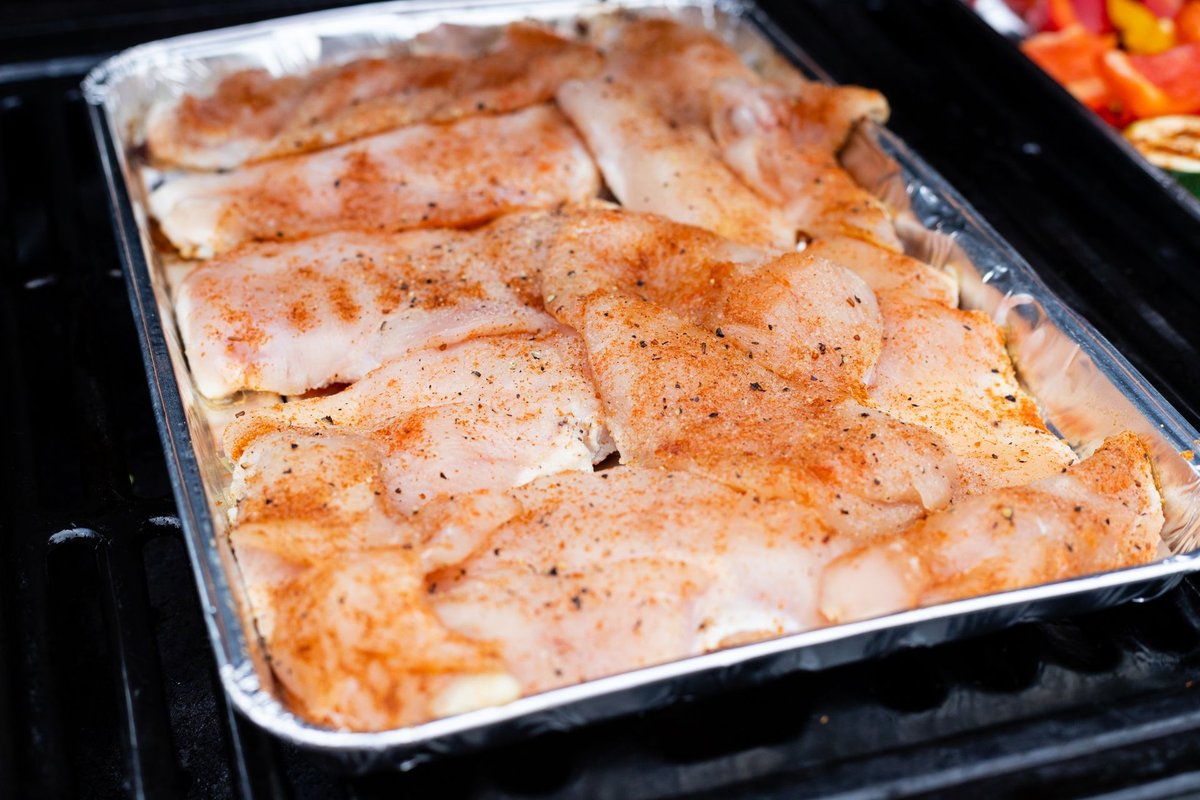
On a sheet pan the chicken and the vegetables end up side by side, so the raw step needs care before they meet. The FoodSafety.gov 4 Steps to Food Safety page says not to wash meat, poultry, eggs or seafood, to avoid spreading harmful germs around your kitchen. The FoodSafety.gov 4 Steps to Food Safety page says to use one cutting board for fresh produce and other foods that will not be cooked before they are eaten, and another for raw meat, poultry or seafood.
The FoodSafety.gov 4 Steps to Food Safety page says to wash cutting boards, dishes, utensils and countertops with hot, soapy water, especially after they have held raw meat, poultry, seafood or eggs. A simple routine for two: cut the vegetables first, put them on the pan, then handle the chicken and wash your hands and the board before anything else is touched.
The one number: 165°F
With a small pan it is tempting to judge the chicken by looking. Do not. The USDA Food Safety and Inspection Service doneness page says appearance and color are not reliable indicators of safety or doneness, and that using a food thermometer is the only way to tell if harmful bacteria have been destroyed. The FoodSafety.gov safe minimum temperature chart gives 165°F for chicken, turkey and other poultry, including breasts, legs, thighs and wings.
Where to put the thermometer matters. The FoodSafety.gov 4 Steps to Food Safety page says to place the food thermometer in the thickest part of the food, making sure it does not touch bone, fat or gristle. The USDA Food Safety and Inspection Service doneness page says to clean your food thermometer with hot, soapy water before and after each use.
Lay out the pan for two
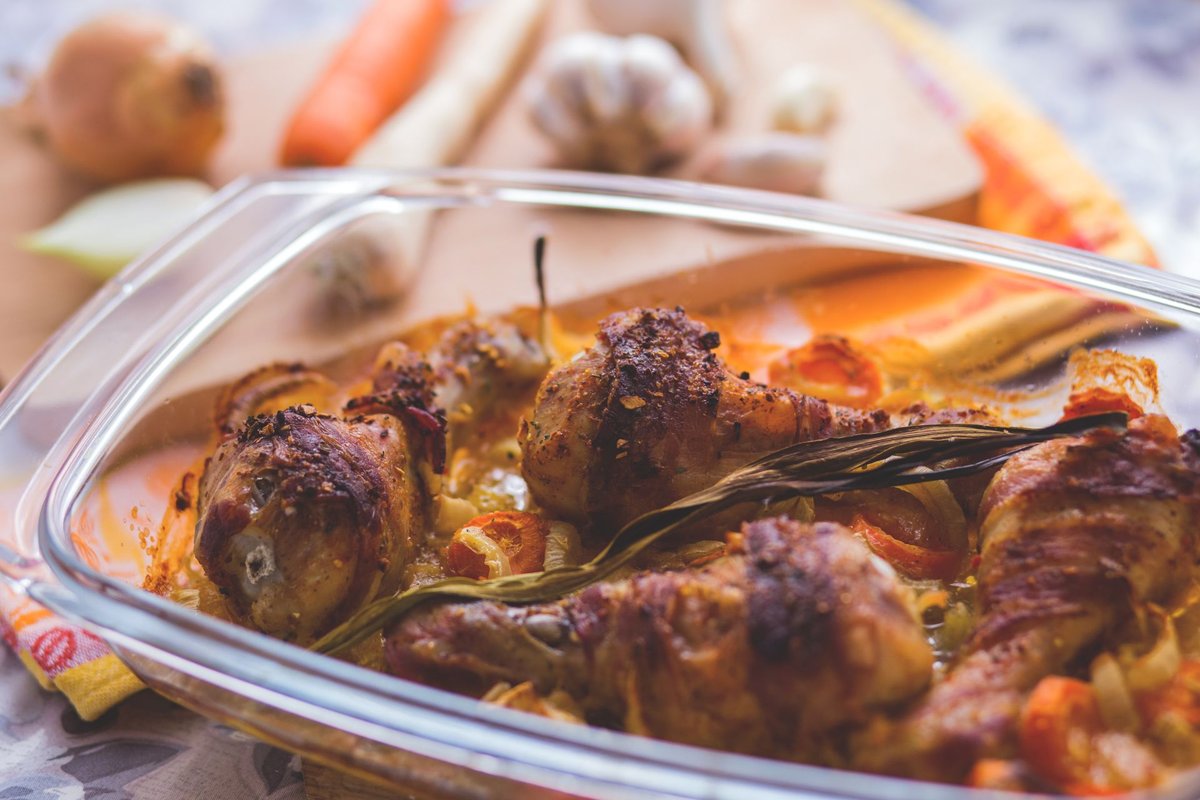
Whatever recipe you follow, a few habits suit a small pan. They are our own suggestions, not a source's rules.
- Choose chicken pieces of about the same size, so they finish together and one thermometer check tells you what you need to know.
- Spread the vegetables in a single layer with room between them. A crowded pan steams instead of browning.
- Give the vegetables the oven temperature and time your recipe calls for, and test the chicken with the thermometer before you serve it, a little early rather than late.
- Line the pan with parchment paper or foil if you want less to wash.
Storing the extra portion
Cook enough for tomorrow on purpose. The table gives the storage times, and the paragraphs after it name where each one comes from. Raw ground chicken is listed for comparison, since some recipes call for it.
| Food | Refrigerator | Freezer |
|---|---|---|
| Raw chicken pieces | 1 to 2 days | 9 months |
| Raw ground chicken | 1 to 2 days | 3 to 4 months |
| Cooked chicken leftovers | 3 to 4 days | 2 to 6 months |
The FoodSafety.gov Cold Food Storage Chart gives 1 to 2 days in the refrigerator and 3 to 4 months in the freezer for hamburger, ground beef, turkey, chicken and other ground poultry. The FoodSafety.gov Cold Food Storage Chart gives 3 to 4 days in the refrigerator and 2 to 6 months in the freezer for leftover cooked meat or poultry. The FoodSafety.gov Cold Food Storage Chart says its freezer times are for quality only.
The FoodSafety.gov 4 Steps to Food Safety page says never to leave perishable foods out of refrigeration for more than 2 hours, or 1 hour if the food is exposed to temperatures above 90°F. The FoodSafety.gov safe minimum temperature chart gives 165°F for leftovers of any type, so reheat the second portion until a thermometer says so.
A three-night plan for one pan
- Night 1: sheet pan chicken and vegetables. Cook four pieces if you can, so two are left over.
- Night 2: eat the leftover chicken, reheated to 165°F, over rice or in a sandwich. This is inside the 3 to 4 days in the table.
- Night 3: something that does not need chicken. Our meal prep for one guide has ideas for mixing the week up, and freezer meals for one shows how to freeze a portion for later.
Common mistakes to avoid
- Judging doneness by color. Use a food thermometer and look for 165°F.
- Rinsing the chicken in the sink. Skip the rinse and go straight to the pan.
- Using one board for the chicken and the salad.
- Thawing on the counter. Plan the day before and use the refrigerator.
- Leaving the pan on the stove to cool while you eat. Put the extra portion in the refrigerator within 2 hours.
Your next step
Next time you shop, buy chicken pieces for two meals and put half in the freezer the same day, wrapped as one portion. Then pick the recipe you will cook first. If you need an idea, Dinners for One or Two lists more small-table dinners. Check your own recipe and your own dietary needs before you cook; this page is general information, not medical advice.
Sources
- www.foodsafety.gov/food-safety-charts/cold-food-storage-charts
- www.foodsafety.gov/keep-food-safe/4-steps-to-food-safety
- www.fsis.usda.gov/food-safety/safe-food-handling-and-preparation/food-safety-basics/freezing-and-food-safety
- www.fsis.usda.gov/food-safety/safe-food-handling-and-preparation/food-safety-basics/doneness-versus-safety
- www.foodsafety.gov/food-safety-charts/safe-minimum-internal-temperatures